Negotiating With Style

Author name: Constantin

Negotiation Science

Are You Selling to a Maximizer or a Satisficer? Why It Matters More Than You Think

In Vancouver, two ice cream shops competed for customers.
One offered 20 flavors. The other? 200.

Maximizers—those who always want the “best possible” choice—drove farther for the bigger selection. But when asked afterward, they were less satisfied with their choice than customers who picked from the smaller menu.

For sales professionals, the lesson is simple: know whether your buyer is a maximizer or a satisficer. The first will want every option, comparison, and reassurance. The second will move faster once the essentials are met. Your job is to spot the difference—and adapt your approach before their decision stalls.

Negotiation Stories

Empty-Handed Is Not Powerless: What Switzerland’s Tariff Setback Can Teach Us About Negotiating from a Weak Position

When Power Fails, Build Alternatives
Swiss ministers returned from Washington empty-handed: 39% U.S. tariffs will hit Swiss exports, giving EU competitors a major edge. But is being powerless the end? Not if you understand how to flip a power imbalance. In this article, I explore what Swiss leaders can learn from a real-world case where a company turned desperation into leverage—and how Switzerland can do the same.

Negotiation Stories

How to Buy Jets When Negotiating with a Tank: The F-35 Dilemma

Switzerland is facing a sharp increase in the cost of its F-35 jet purchase—raising questions about U.S. pricing tactics, transatlantic power dynamics, and Switzerland’s negotiation strategy. Why is the price going up? What can Switzerland do when negotiating with a “tank-style” counterpart? And why is this story surfacing now, just months after a new defense minister took office? This opinion piece offers a principled take on a complex negotiation—grounded in facts, diplomacy, and strategic thinking.

Negotiation Stories

What Startups Should Learn from Rihanna — When She Got Nothing to Perform in Front of Millions

What can startups learn from Rihanna’s unpaid Super Bowl performance?
Sometimes the smartest deals don’t involve money, but attention, control, and long-term leverage. This article unpacks how Rihanna turned a $0 gig into a multi-million dollar brand moment — and what founders can take away when negotiating proof-of-concept deals with large corporation.

Negotiation Science

The Lie We Tell Ourselves About Rational Buyers

Think your buyers are purely rational? Think again.
Even judges—trained to be objective—fall for cognitive biases. So what makes you think your client won’t? This post explores how subtle psychological tactics like Cialdini’s six principles can dramatically shift the outcome of your next deal.
Persuasion isn’t manipulation—it’s mastery.

Negotiation Stories

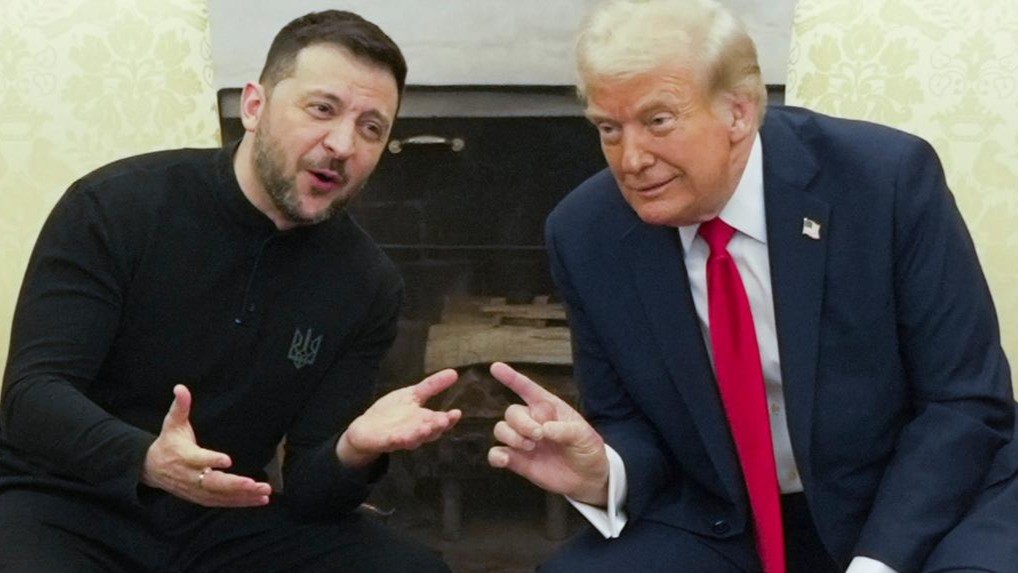
The Trump-Zelensky Negotiation: A Tactical Analysis

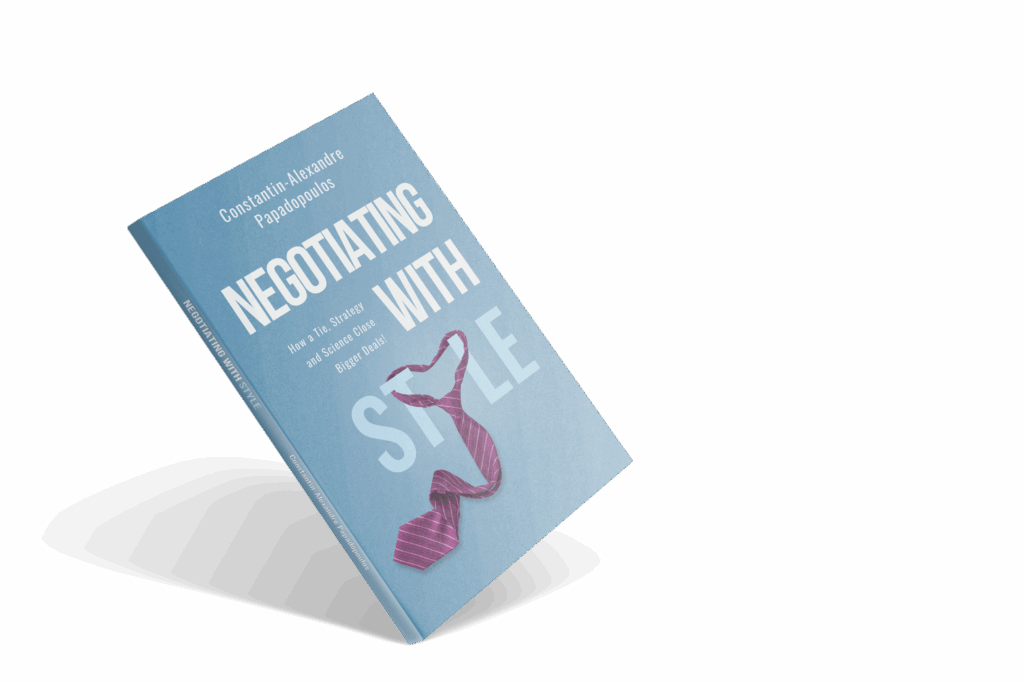
The Trump-Zelensky Negotiation: A Tactical Analysis The conversation between Donald Trump and Volodymyr Zelensky was a textbook example of a power-imbalanced negotiation. This is not a discussion of morals, politics, or geopolitics. Instead, let’s examine it purely through the lens of negotiation strategy. Context: The Power Imbalance At the time of their conversation, Ukraine was in a position of weakness. Zelensky needed U.S. support to maintain resistance against Russia while simultaneously seeking leverage in negotiations for a peace treaty. The challenge? Trump’s worldview does not align with Ukraine’s framing of the situation. While Zelensky attempted to argue that U.S. support was in America’s own interest, this strategy failed because Trump did not share that perspective. It was a high-risk gamble that did not pay off. The Public Nature of the Negotiation One of the critical miscalculations in Zelensky’s approach was the setting of the negotiation. This was not a closed-door discussion where candid exchanges and tactical persuasion could unfold. Instead, it was a public performance. Trump was speaking to U.S. taxpayers. His vice president and secretary of state were present, reinforcing the idea that this was a staged conversation, carefully orchestrated for an American audience. Meanwhile, Zelensky was addressing his own people and European allies, which created a disjointed dynamic. The Tactical Misstep Zelensky held his ground impressively, but his chosen tactics were not suited to the context. His approach assumed that Trump would act as a conventional leader balancing interests. However, Trump was not playing the role of a statesman—he was acting as a “tank” negotiator, a style focused on dominance and winning at all costs. Tanks are relentless. They don’t seek compromise; they seek to establish superiority. How to Handle a Tank Negotiator When facing a “tank” negotiator, a frontal attack can only succeed if you match their strength—an option that was unavailable to Zelensky. The more effective strategy, especially in public negotiations, is to use a psychological disarmament tactic: write your counterpart’s victory speech for them. Instead of direct confrontation, Zelensky could have reframed Trump’s involvement as a win for Trump himself. In Aesop’s fable, the sun defeats the wind not by force, but by warming its opponent into submission. Compliments and strategic positioning could have led Trump to believe that supporting Ukraine was a demonstration of his own power and deal-making prowess. The narrative should have been shaped to align with Trump’s self-image, turning Ukraine’s needs into an opportunity for Trump to claim victory on the global stage. How Other Leaders Managed Trump This is something that foreign leaders have increasingly understood when dealing with Trump. As Fareed Zakaria recently pointed out, leaders such as Justin Trudeau and King Abdullah II of Jordan have developed an effective approach: lavish Trump with praise, announce a symbolic but minimal concession, and let him claim a win. For instance, when Trump asked Jordan to take in 2 million Palestinian refugees from Gaza, King Abdullah responded with, “Because of your wisdom and your leadership and your foresight, we’re going to take 2,000 children to treat them medically and send them back.” Trump beamed at this—convinced he had won. In hindsight, Zelensky might have benefited from studying such tactics. This is not to suggest that anyone could have done better in his position, but rather to acknowledge that the situation got out of hand partly because the negotiation approach did not align with Trump’s negotiation psychology. The Broader Context: Negotiating in the Age of Spectacle We must also acknowledge that the 19th-century salon-style negotiation is no longer applicable in the current U.S. administration. Why? Because they want us to believe that nothing should be handled behind closed doors. We are living in Guy Debord’s Société du Spectacle, where political interactions are shaped by public perception rather than private deliberation. Zelensky likely did not anticipate such a negotiation setting, as Biden and other European leaders do not operate in the same manner. The situation spiraled out of control, not necessarily due to Zelensky’s missteps, but due to the fundamental shift in how negotiations are conducted in the modern political arena. Key Takeaways Understand Your Counterpart’s Perspective – Persuasion fails when it does not align with the other party’s worldview. Trump did not see Ukraine’s survival as a necessity for U.S. security, making Zelensky’s argument ineffective. Recognize the Public vs. Private Negotiation Dynamic – Trump was playing to a domestic audience, while Zelensky was addressing his own. This created a mismatch in strategy. Adapt to the Negotiation Style of Your Counterpart – Fighting a tank head-on without equal force is a losing battle. A strategic alternative is to shape their perception of victory in your favor. Write Your Opponent’s Victory Speech – The best way to influence a strong-willed negotiator in public is to provide them with a narrative that allows them to see themselves as the winner while giving you what you need. Acknowledge the Changing Nature of Negotiations – In an era where spectacle often overrides substance, understanding the performative nature of political discourse is crucial. Private diplomacy is becoming rare, and leaders must adapt accordingly. Learn from Precedents – Other world leaders have effectively managed Trump by letting him believe he secured a great deal. Zelensky may have benefited from a similar approach. Zelensky fought hard, but the setting and tactics worked against him. In high-stakes public negotiations, understanding both the power dynamic and the psychology of your counterpart is critical to success. Tags: #Negotiation #Leadership #Reputation #ConflictResolution #Trump #Zelensky #StrategicThinking #HighStakes About the author Constantin Papadopoulos is a negotiation consultant, trainer, and author of Negotiating with Style. He helps sales professionals, founders, and leaders turn high-stakes conversations into lasting agreements. His work blends strategy, psychology, and storytelling — because in the end, how you negotiate shapes how you’re remembered.

Negotiation Tips & Tricks

Harnessing the Power of ‘No’ in Negotiations

Harnessing the Power of ‘No’ in Negotiations As you have already read in this newsletter, negotiation is a dance of words and psychology. One of the most intriguing steps in this dance, as I discovered through Chris Voss’s “Never Split the Difference” and Jim Camp’s “Start with No,” is the deliberate pursuit of a “no” from your negotiation counterpart. Seeking “No” to Empower Your Counterpart In a negotiation, a “no” can be more empowering than a “yes.” It provides a sense of control and security to the counterpart. For instance, compare these two questions: The second question, inviting a “no,” subtly empowers the respondent and shifts the negotiation dynamic. Strategically Surrendering Control The battle in negotiations often lies in who holds control. By maneuvering the counterpart to say “no,” you provide them with an illusion of control, without actually ceding any real power. This strategy often makes the counterpart more amenable and open, as they perceive themselves to be making the decisions. Leveraging “No” in Stalling Situations In moments where negotiations stall, a question that leads to a “no” can be a catalyst. For example: It appears our discussions haven’t progressed recently. Have you lost interest in this project? This approach invites a clear response and can effectively address and resolve uncertainties. Leveraging “No” in the decision stage Would it be a terrible idea to agree on the following next steps … ? … can be a game-changer. This tactful form of asking probes the counterpart’s boundaries and preferences without direct confrontation. It’s a way of floating ideas and gauging reactions, effectively opening the door for your counterpart to suggest alternatives or express concerns. This question, suggestive yet non-threatening, can lead the negotiation into new, mutually agreeable directions. It’s not just about getting a ‘yes’ or ‘no’—it’s about encouraging a dialogue that reveals deeper insights and paves the way for constructive next steps. Understanding the Power of Your Own “No” While encouraging “no” from others, don’t underestimate the power of your own “no.” Every proposal should be critically evaluated for its alignment with your goals and benefits. If it falls short, have the confidence to decline. We delve into the significance of your own “No” while addressing the importance of preparation. Conclusion Negotiations are not just about getting to “yes.” Sometimes, the most strategic path involves navigating through “no.” By understanding and mastering this approach, you can transform your negotiations into more nuanced, controlled, and ultimately successful interactions. What shall you do? I invite you to reflect on your past negotiations. Have there been moments where a “no” could have shifted the dynamic in your favor? How might you incorporate this strategy in your future negotiations? Share your thoughts or experiences below. Let’s discuss how the power of “no” can reshape our understanding of successful negotiations. About the author Constantin Papadopoulos Co-founder of snipers.sale and negotiation engineer. Our participants benefit from psychology, communication and business negotiation expertise to maximize their negotiation outcomes.
Negotiation Tips & Tricks

Do negotiations make you anxious?

Do negotiations make you anxious? In the past ten days, I’ve encountered multiple stories that highlight a common challenge: negotiation anxiety. One such story comes from the sparring sessions at snipers.sale, typically a fun exercise, which unexpectedly led to a sleepless night for a newcomer. It raises an intriguing question: Does the mere thought of sitting across the negotiation table or joining a virtual meeting trigger a sense of dread for many of us? If you’ve ever felt your heart race in anticipation of a negotiation, know that you are not alone. This article is for you. Here, we delve into the reasons behind the intimidation often felt in negotiations, ponder the potential benefits of this anxiety, and provide you with actionable steps to manage and transform these fears. Our aim is to guide you in turning negotiation anxiety from a hindrance into a source of strength.” Where does the fear come from? Fear of the unknown is often at the heart of negotiation anxiety. It’s the uncertainty about the other party’s goals, strategies, or bottom line that can paralyze or lead to rash decisions. Another significant source of anxiety is fear of loss, where the prospect of losing something of value overshadows the potential gains. Negotiators also often worry about being taken advantage of, especially in situations where there is a perceived power imbalance. In addition, the tension between achieving personal goals and the need for collaborative outcomes can create anxiety. What’s the impact of fear? Fear in negotiations often reveals itself in various, subtle ways. One common response to fear is over-reliance on others. It’s prudent to seek advice from colleagues or friends, especially when it pertains to specialized areas like legal, real estate, or business matters. However, the key is in striking a balance between this external advice and your own informed judgment. A thorough assessment of the situation, coupled with such inputs, ensures that decisions align with your strategic plan and objectives. Another significant impact of fear is the tendency to avoid negotiations entirely. Think back to instances where you might have gained a significant advantage but chose to wait or completely discard the proposal. Often, it seems simpler not to enter the negotiation arena at all. However, understanding the true cost of such avoidance is crucial. It can be the push needed to confront these fears, motivating you to develop the skills required for effective negotiation. Embracing negotiation, despite the inherent fear, can open doors to opportunities and interests that might otherwise remain unexplored. Snipers.sale’s Experience with Negotiation Fear At Snipers.sale, our firsthand experiences with emotionally charged negotiations have vividly highlighted how they can amplify anxiety. These scenarios often extend beyond the straightforward signing of deals. We find ourselves navigating complex issues like delayed payments, unresolved disputes, or even perceived injustices. Our key strategy in these instances has been effective emotion management. This involves not only recognizing and addressing our own emotional reactions but also engaging in empathetic listening and maintaining clear, transparent communication. We’ve also encountered anxiety when considering changes that could potentially benefit our position, such as asking for a price increase or revising terms and conditions. In these situations, our approach has been to strike a balance between assertiveness and fairness, always underpinned by a careful assessment of the situation. It’s about finding the middle ground where our interests are protected while maintaining equitable relations. These experiences have taught us a crucial lesson: anxiety in negotiations is not exclusive to novices; it’s a universal challenge that affects even the most seasoned professionals. Understanding this has been pivotal for our team. It’s led us to constantly evolve our strategies, ensuring they are not just effective but also adaptable to the emotional complexities of negotiation. What you can do? Understanding the context of negotiation can be a powerful antidote to fear. This includes gathering information, anticipating challenges, and formulating strategies. Clear communication also plays a key role in reducing misunderstandings and building trust. Being direct and transparent about goals, constraints, and expectations can prevent unnecessary anxiety. In addition, active listening and empathy can help to understand the other party’s perspective. Using psychological dynamics can give negotiators an edge. Techniques such as framing the negotiation positively, using anchoring to set expectations, and employing persuasive communication can improve negotiation outcomes and reduce anxiety by providing a sense of control and predictability. One last thought Our journey through negotiation craftsmanship reveals that our greatest challenge often lies within. The antidote? A moment of introspection, a look in the mirror, and a decision to take control of the negotiation process. Echoing the timeless wisdom of Yoda, ‘Fear is the path to the dark side. Fear leads to anger. Anger leads to hate. Hate leads to suffering.’ This profound insight, though from a galaxy far, far away, mirrors the complexities of negotiation anxiety in our world. Fear and anxiety, while natural, don’t have to dictate our outcomes. Recognizing and understanding these emotions is the first step in transforming them from obstacles to catalysts for growth and success. The goal is not to eradicate anxiety completely but to learn to navigate it with skill and confidence. Like a seasoned athlete adjusting strategies at half-time, the key lies in having a robust game plan coupled with the agility to adapt as the game of negotiation unfolds. By embracing this approach, we empower ourselves to manage anxiety effectively, turning potential setbacks into opportunities for successful negotiations. Now, we turn the discussion over to you. How do you manage anxiety during your negotiations? Share your experiences and strategies in the comments below and let’s continue to learn from each other in this ever-evolving art of negotiation.” About the author Constantin Papadopoulos Co-founder of snipers.sale and negotiation engineer. Our participants benefit from psychology, communication and business negotiation expertise to maximize their negotiation outcomes.

Scroll to Top